
Monroe Projected Versus Actual Release
A projected date is a calculation or planned milestone. An actual release date records when custody ended or changed hands. For someone held at the Monroe County Jail before trial, there may be no projected date at all. Bond can be posted at any time, a judge can enter an order, charges can change, or another agency can lodge a hold. The public jail feed shows arrest and custody facts, but it does not publish a formal projected-release field.
A sentenced person has a different timeline. County-time sentences are administered by the jailer under the court's sentence and Georgia's county inmate rule. State-prison sentences use GDC fields such as sentence begin date, sentence end date, and maximum release date. Parole adds a separate tentative parole month and final Board review. None of those should be relabeled as an actual release before the custody record confirms it.
- Maximum release date
- The GDC date if the full sentence is served, excluding parole.
- Tentative parole month
- The month set for final parole review, not a guaranteed release.
- Sentence end date
- The effective end after sentence length, non-running time, and earned credits are considered.
- Detainer
- A request or legal hold that may prevent release to the community.
Find a Monroe Projected Release Date
The first task is jurisdiction. A Forsyth connection does not prove Monroe County jail custody because GDC offices and Burruss Correctional Training Center are also in Forsyth. Confirm whether the person is a local detainee, a county-sentenced inmate, or a state prisoner. Then use the office that calculates that custody term.
- Check the Monroe Sheriff jail feed to see whether the person is currently booked. Absence is not proof of release.
- For a local sentence or pretrial case, contact the Monroe County Jail records route and the court named in the charge record. Ask for sentence, jail credit, release date, release reason, and any hold.
- For a state prisoner, search GDC Find an Offender by GDC ID, case number, or identifying details. Read the labels exactly.
- If parole is possible, check the TPM application using the inmate or GDC number. Treat the result as tentative.
- Confirm a completed release through the originating jail or GDC record, then check the parolee database if community parole may have begun.
The Monroe County released inmate record path covers the broader confirmation chain when a person has already left a roster. A current-custody locator answers a different question from a release record.
The GDC offender search is the state-prison entry point.
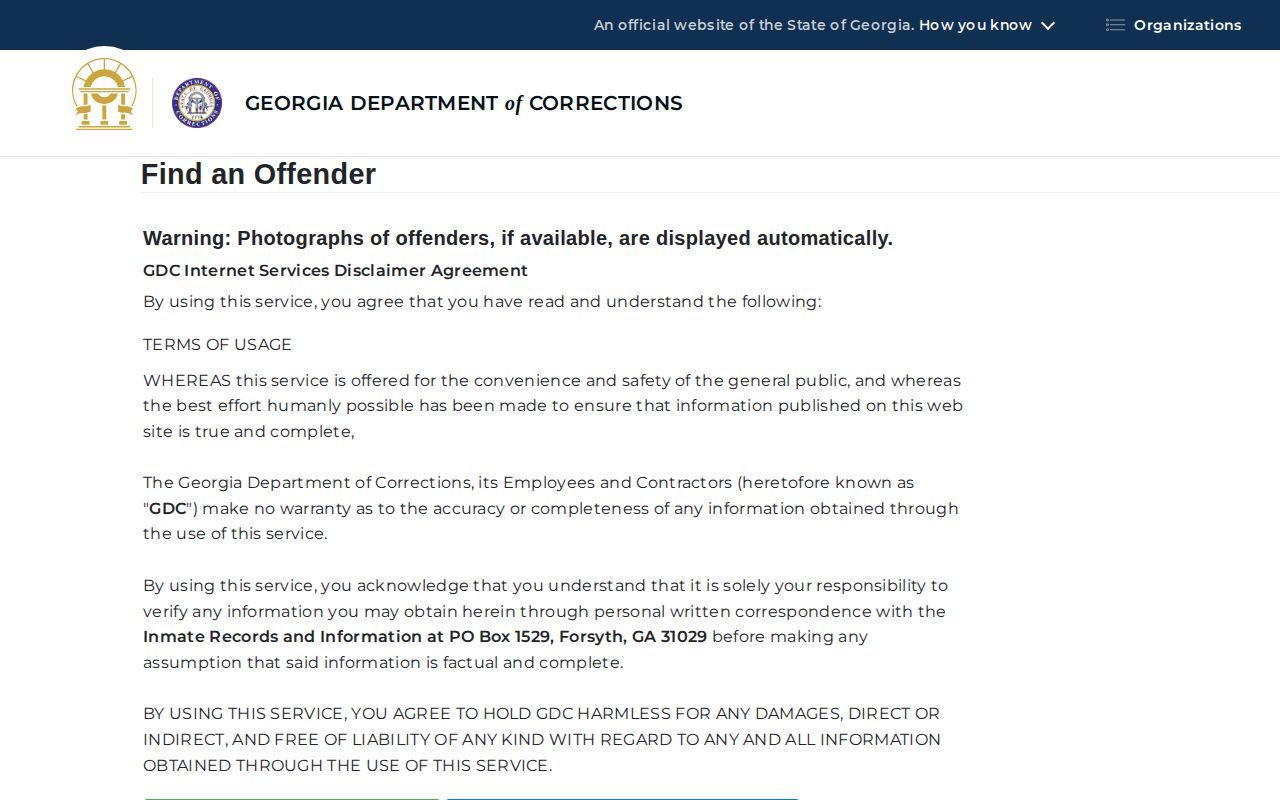
The search supports state cases, including people at Burruss, but not a short county-jail bond release.
| GDC field | What it means |
|---|---|
| Sentence begin date | Effective start, including jail time served when appropriate |
| Sentence end date | Effective end after sentence length, non-running time, and earned credits |
| Maximum release date | Date of release if the whole sentence is served, excluding parole |
| Tentative parole month | Board-selected month for final review, not final release |
| Parole consideration date | Field used for life sentences and parole revocations |
Monroe County Earned-Time Calculation
County and state calculations follow different records. O.C.G.A. 42-4-7 states that a county inmate sentenced to confinement is released at sentence expiration less earned-time allowances. The jailer also keeps the county inmate record. Monroe's public feed does not show an earned-time formula or projected date, so the jail records unit and sentencing court are the sound sources for a local calculation.
For GDC custody, Rule 125-2-4 defines the date fields. Sentence begin date accounts for jail time served when appropriate. Sentence end date reflects maximum sentence length, non-running time, and earned credits. Maximum release date assumes the full term is served and excludes parole. These fields describe sentence administration; they are not interchangeable with the day a person walks out.
Georgia does not supply one universal eighty-five-percent rule for every state prisoner. Serious violent felony rules, mandatory minimums, repeat-offender restrictions, earned time, and parole eligibility vary by sentence and offense. A precise date must come from the agency record, not a general percentage applied to the sentence.
The county inmate statute shows the earned-time rule used for local sentences.
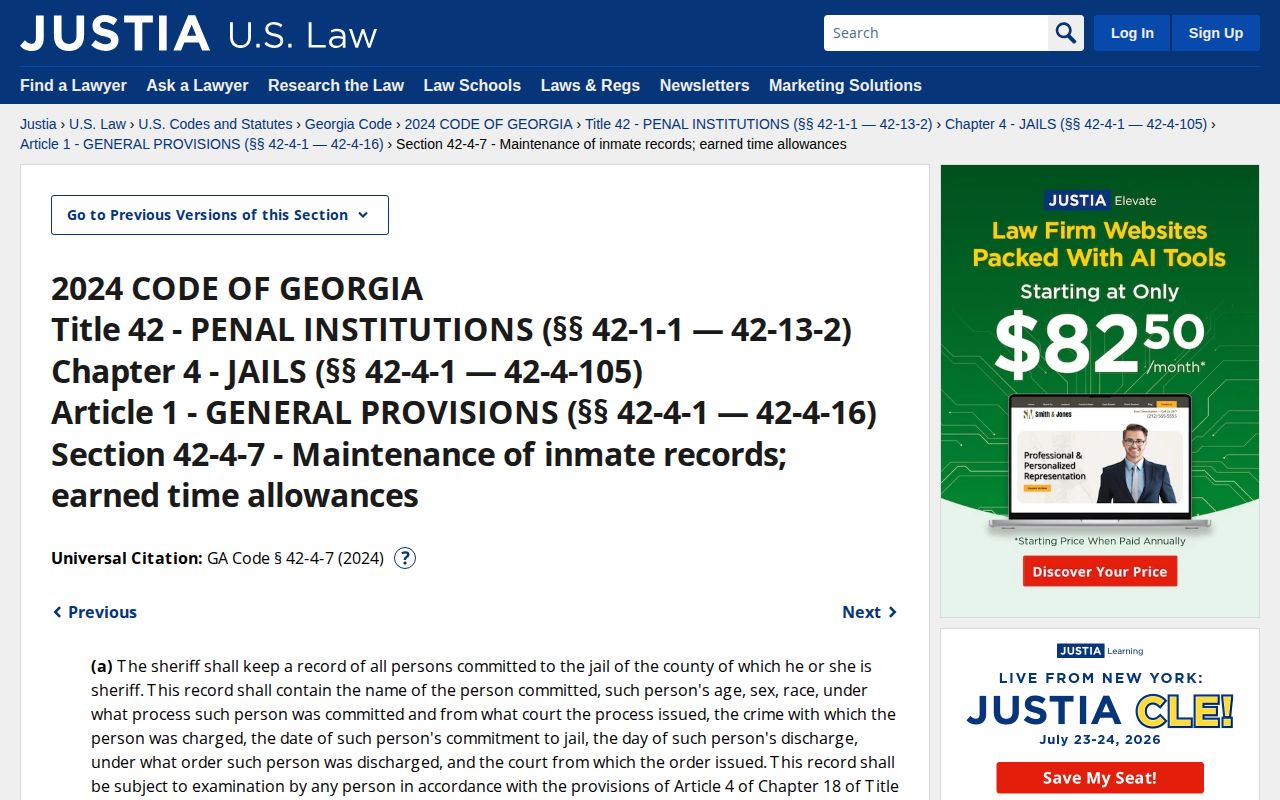
The statute confirms why a county release calculation must be obtained from county sentence records rather than a GDC parole field.
Why Monroe Release Dates Change
A date may move because the legal or administrative inputs change. The strongest clue is the field label and the agency that owns it. A county court order can alter local custody, while the Parole Board controls parole timing. GDC manages sentence administration for state prisoners. A hold can prevent release to the community even when one sentence has reached an endpoint.
| Factor | Possible effect | Where to verify |
|---|---|---|
| Earned-time credit | May reduce a county or state sentence calculation | Jail records or GDC |
| Disciplinary loss | May delay a tentative or calculated date | Custody agency |
| Detainer or hold | May cause transfer instead of community release | Holding and requesting agencies |
| Court order | May release, modify, revoke, or continue custody | Sentencing court |
| Parole review | May set, postpone, cancel, or deny parole timing | Parole Board |
| Non-running time | Can extend sentence-end calculations | GDC sentence record |
Monroe County also has a local-to-federal distinction. A local criminal release may lead to another agency's custody when a detainer applies. The Monroe Sheriff's 287(g) agreement makes it especially important not to treat release from the county booking as proof that all custody ended. Ask whether the result was community release or transfer.
Note: One sentence can end while another agency's lawful hold keeps the person in custody.
Confirm Monroe County Release Dates
Use a custody change, official release record, or discharge entry to confirm the event. For Monroe County Jail, request booking and release details from the Sheriff's Records Office at 145 L. Cary Bittick Drive in Forsyth. The office lists phone (478) 994-7717, fax (478) 992-5075, and records@monroecosheriffga.us. A focused request can ask for booking time, release time, release reason, bond, holding agency, transfer destination, and final custody status.
For a state prisoner, GDC advises written verification through Inmate Records and Information at PO Box 1529, Forsyth, GA 31029. The public offender record is useful, but GDC itself warns that information should be verified before it is treated as complete. If parole follows, the parolee database can establish the next status.
A custody alert offers another check. The resolved VINE Inmate Check explains how Georgia notifications work. A notice can prompt verification, but the jail, GDC, or court record remains the source for formal release details.
145 L. Cary Bittick Drive
Forsyth, GA 31029
(478) 994-7717
records@monroecosheriffga.us
Open Records Request
Monroe Tentative Parole Month Limits
The field most often mistaken for a final date is the tentative parole month. The Board describes a TPM as the month when it completes final review and, if appropriate, sets a parole release date. Conduct and program completion can affect that review. Misconduct reports normally lead to postponement or cancellation, so a TPM should never be stated as a guaranteed departure date.
The TPM field is also not used in every case. GDC's rule distinguishes life and death sentences and sentences of twelve months or less, while a parole consideration date applies to life sentences and parole revocations. The Board's TPM explanation is the best source for interpreting the label.
The source page below explains why the month remains tentative.
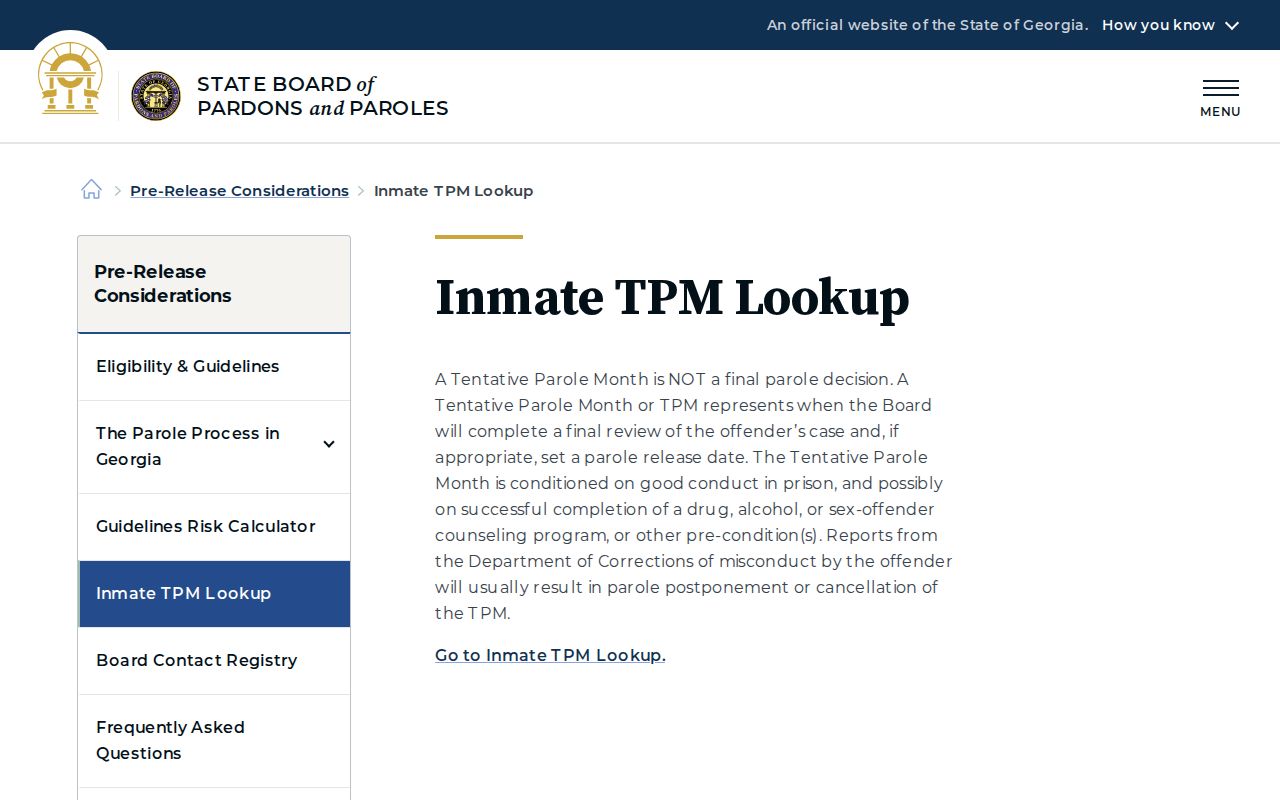
The Board's wording separates a review month from the later act of setting a parole release date.
Monroe Parole Eligibility Timeline
Eligibility is another milestone that can be mistaken for release. Under O.C.G.A. 42-9-45, the general felony baseline is nine months or one-third of the sentence, whichever is greater. Exceptions apply, and the Board says few people are released at first eligibility. Serious violent felony provisions and life-sentence rules can create much longer or unavailable parole paths.
The Board's process material notes that eligible felony inmates are considered automatically. It also explains that some offense and repeat-offender categories are not eligible. Thus, no application date, eligibility date, or Board review date should be copied into a Monroe County release record as the actual date of release.
The Georgia parole process page shows that sequence.
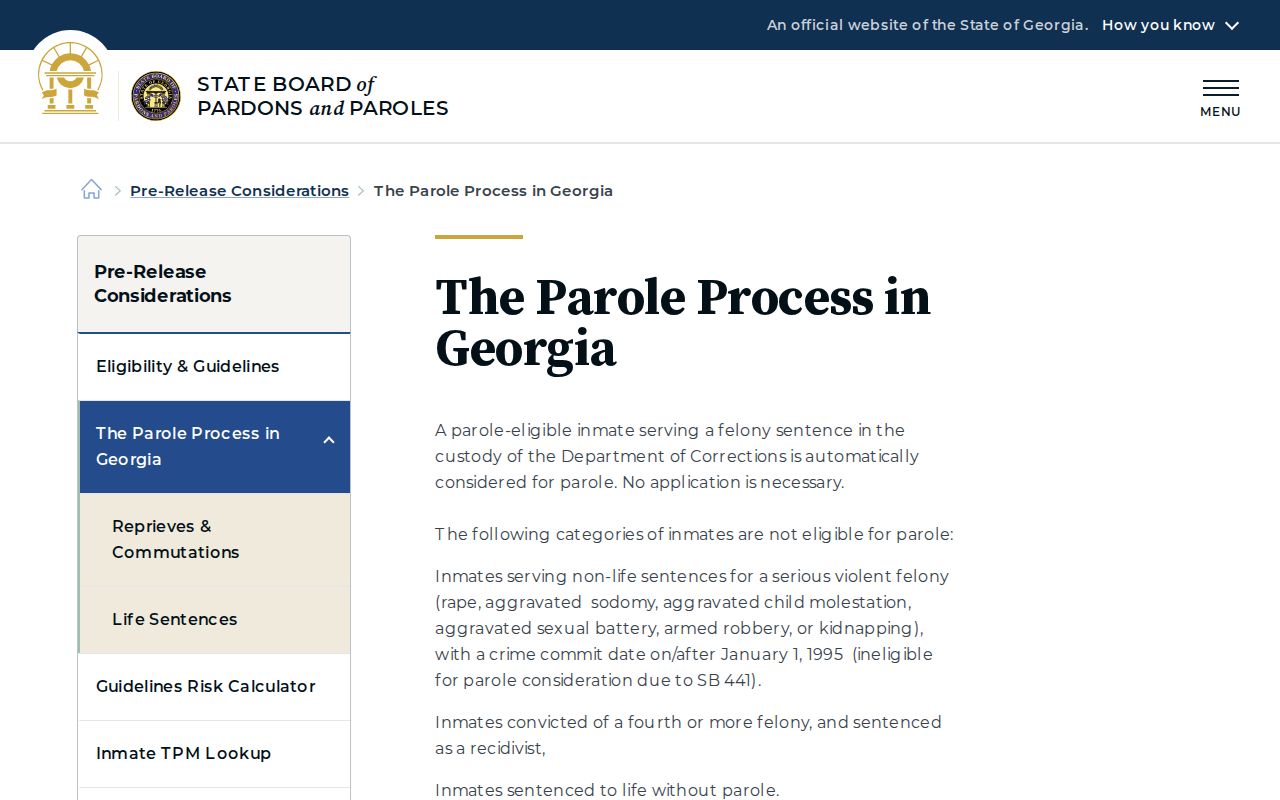
The sequence makes clear that eligibility begins review; it does not end custody.
Monroe Release Dates by Custody
Several systems can contain a date for a person connected with Monroe County, but the dates do not describe the same event. The Sheriff's feed covers local bookings. It can show a released status in recent arrest results, yet it does not provide a projected-release field or a complete release reason. The sentencing court supplies the legal term and later orders. Together, jail and court records are the main route for county custody.
GDC covers state-prison custody. A person transferred from the Monroe County Jail to state custody no longer follows the local jail calculation. Someone at Burruss Correctional Training Center likewise uses GDC sentence fields and Board parole tools. After parole begins, the parolee record and DCS supervision route address the community status. The physical location in Forsyth does not merge those state and county records.
Federal custody has its own timeline. The BOP Inmate Locator covers federal records from 1982 forward and may display a release date, but BOP warns that First Step Act recalculation can make a listed date outdated. If a past release date appears with no facility location, BOP explains that the person left BOP custody on that date, though another system or supervision may still apply. That is not a Monroe jail release record.
Immigration custody is also separate. The ICE Online Detainee Locator is designed for current ICE custody or CBP custody beyond its stated time threshold, not for calculating a county sentence. A local release can lead to a transfer under a detainer. Therefore, ask each office whether the date means release to the community, transfer to another agency, maximum sentence expiration, or a planned review. The label and jurisdiction are part of the answer.
For every route, record the date checked and the exact field name. A later update can then be compared with the earlier result without confusing a review milestone with release.
Public Record Search
Sponsored Results